
As-Built Surveys for Long Island Projects
Need to document completed construction? Discuss an as-built survey with Aerial Land Surveying, D.P.C. Share the property address, the work completed and the requirements from your project team or reviewing department so our office can discuss the appropriate scope.
Record the Work That's Been Built
Completed Improvements
An as-built survey documents requested information about constructed work. It gives the person reviewing the project a record of the conditions addressed by the survey scope. Tell us which improvements need to be shown and why the document is being requested, whether you're a homeowner finishing an addition or a contractor coordinating a larger project.
A description such as "the job is finished" is useful context, but it doesn't define the deliverable. Include the plans, permit reference or checklist that explains what the recipient needs. The office can then discuss the work against the project requirement rather than assuming every as-built request covers the same information.
The Plans Behind the Request
Approved plans describe the proposed work, while an as-built request concerns the work that has been constructed. Identify the plan version the recipient is using and mention any changes made during construction. Your design professional can clarify which drawings and approvals should accompany the survey discussion.
Keep revised plans distinguishable from older copies. A forwarded email with several attachments can become confusing if the current version is unclear, especially where different trades or design professionals are involved. Tell our office which contact can answer questions about revisions before arrangements are made.
Define the Recipient's Requirements
Department and Project Checklists
A building department, engineering department or project professional can request particular information for review. Send the actual instructions and identify the department or person who will receive the result. Requirements vary by project and jurisdiction, so a checklist from a different property should be treated as background rather than an assumed match.
For example, the Town of Southampton's site plan review guidance describes as-built documentation within its site-plan completion process. That is a particular town procedure. Use the instructions that apply to your property and submission, including any project-specific conditions supplied by the reviewing department.
Information to Include in the Scope
Point out the improvements the reviewer has asked to see. A request could concern a building, paved areas, drainage features or elevations, but the information included must be agreed for the actual job. Identify any requested dimensions, elevation references or supporting documents with the person who will use them.
Ask how the completed document needs to be delivered and whether the recipient has specific signature, certification or file requirements. Our office will discuss the requested deliverable with you. A broad description of an as-built service should never stand in for that project-specific conversation.
Review and Approval
Survey documentation is one part of a project's submission. The reviewing authority or responsible project professional determines what is acceptable for their purpose. An as-built survey does not by itself issue a permit, resolve every construction question or establish that the project has received final approval.
If the reviewer has already raised a concern, share the written comment. The office needs to understand whether you are requesting a new survey, additional information or clarification of existing work. Keep the recipient's wording intact so the request doesn't lose a qualification in a verbal summary.
Arrange Work Around the Project Stage
The Site's Current Condition
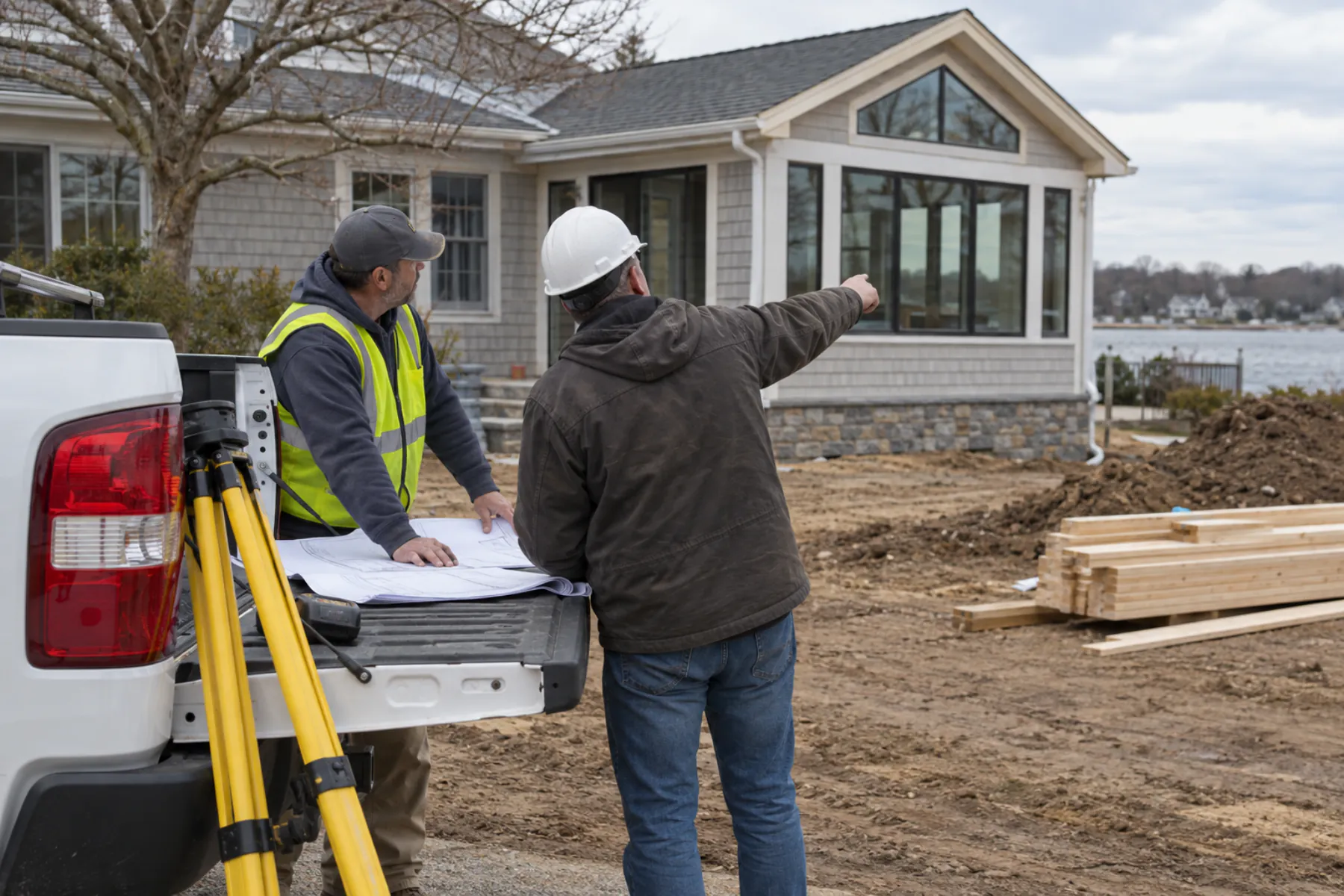
Explain which work is complete and which work is still underway. A project can be close to completion while grading, paving or another relevant improvement remains unfinished. Your project team should identify the point at which the information is needed and the conditions the requested document must represent.
Tell us about expected changes after the proposed survey date. This gives the office and your project contact a chance to discuss the timing before the work is arranged. A subsequent change to the site or the recipient's requirements can create a different documentation need.
Access and Coordination
Provide the name of the person who can authorize access and coordinate with the site team. Mention occupied areas, locked entrances, working contractors and any restrictions that need to be discussed. The initial inquiry should identify the site contact without assuming that the person requesting the quote controls access.
For work involving more than one recipient, tell us who is coordinating the survey request. A homeowner, general contractor and architect can each have a role, but a clear contact helps the office direct questions about plans and timing to the right person.
The Survey for Each Project Stage
- Planning the designTopographic survey
- Before work begins near a property lineBoundary survey
- After the work is builtAs-built survey
Prepare an As-Built Survey Request
Your Starting Information
Send the address and a brief description of the completed work. The details below help connect the request to the relevant project records and the people responsible for using the document.
- The property address or parcel identifier, including the town or village.
- The improvements to be documented and the current construction stage.
- The plans or revisions your project team is using.
- The reviewing party's checklist, letter or submission instructions.
- The requested delivery date and the project contact who can clarify it.
You can start an inquiry before every item is available. Identify what you have and what you're waiting for, and our office will discuss the documents needed for the proposed scope. Arrange document exchange with the office rather than assuming the request form includes an upload service.
Existing Surveys and Prior Orders
Mention any earlier survey of the property and who prepared it. If Aerial Land Surveying, D.P.C. has already worked on the project, include the order reference if you have it. An earlier drawing can provide context, but its purpose and the current requested work still need to be reviewed together.
For a question about an existing order, use our contact page with the property address. This helps distinguish a status or document question from a request to quote a different scope of work.
Pricing and Submission Dates
Agree on the Deliverable
Pricing depends on the property, the requested information and the scope of work. Ask what the quote includes and identify the recipient before proceeding, particularly if several departments or members of your project team need different information.
Your quote discussion should also address how a later revision or additional request would be handled. If a department changes its instructions, send the change to the office so it can be reviewed. Avoid relying on a price for one described deliverable as though it covered every later project stage.
Allow for the Recipient's Review
Share the date you need the document and explain whether it relates to an inspection, final submission or another milestone. Our office will discuss available timing for the survey work. The time a department or another recipient needs to review a submission is a separate part of your project schedule.
Need a job done in two to three business days? Contact us for expedited pricing and availability. Providing a desired date begins a scheduling discussion; it does not confirm an appointment or a delivery commitment.
Your Date Has Two Parts
As-Built Survey Questions
Is an As-Built Survey Useful Before Construction?
It serves a different project stage. For information to support a proposed design, discuss a topographic survey. For property-line questions before work begins, see our boundary survey service. Tell us what the contractor or designer requested so the scope follows the intended use.
Does the Survey Include Every Feature on the Site?
The included information depends on the agreed scope. Share the recipient's requirements and identify the improvements involved. Ask specifically about any feature or elevation that matters to the submission before accepting the proposed work.
Can You Use the Contractor's Drawing?
Send it as supporting information and identify who prepared it. Our office will discuss how it relates to the requested survey. Keep approved plans, contractor records and survey documents clearly identified rather than treating their titles as interchangeable.
What If a Department Asks for a Revision?
Forward the written request with the property and order reference. Explain whether the site has changed since the survey. The office can discuss what the comment concerns and whether additional work is needed for the revised request.
Who Sets the Scope of Survey Services?
The requested purpose and the professional engagement determine the work to discuss and agree. New York's land surveying consumer information provides guidance on working with a surveyor. Bring the intended recipient's requirements into that discussion from the beginning.
Bring Your Completion Requirements to Us
Properties We Serve
We serve Suffolk County, Nassau County and the Hamptons, plus the Bronx, Brooklyn, Queens, Staten Island, Rockland County and Westchester County. Manhattan is outside our service area. Include the exact property location and project type so our office can discuss the requested work with you.
Speak With Our Office
Call (631) 256-3019, Monday to Friday, 9:00 AM to 5:00 PM, or email surveys@aeriallandsurveying.com. To begin a quote request, tell us what has been built, who needs the document and the date you're working toward. Our office will discuss scope, pricing and availability before arrangements are made.