Skip to content
Aerial Land Surveying, D.P.C.

FEMA Elevation Certificates on Long Island

Asked for a FEMA elevation certificate? Aerial Land Surveying, D.P.C. can discuss the property, who requested the document and the information they need. Start with the address and any written request so our office can explain scope, pricing and availability.

Start With the Certificate Request

A Building's Elevation Information

An elevation certificate records building and elevation information used in floodplain management and insurance discussions. It helps the person reviewing your property work from information about the building rather than an assumption about its height. The certificate has a particular purpose, so tell us whether an insurance agent, building department or another professional asked for it.

A note that simply says "elevation" leaves room for misunderstanding. You can share the wording you received, even if you don't know the technical terms. The office can discuss whether the request concerns a FEMA elevation certificate or another survey deliverable before you arrange the work.

The Person Who Needs the Document

Keep the requesting party involved as the scope is discussed. Their written instructions can identify the property, the building concerned, the stage of construction and the intended use. If several buildings share one address, describe which building the request concerns instead of assuming one document will answer every question about the site.

For a purchase or renovation, include the project contact who can clarify the requirement. Having an attorney, insurance agent or design professional copied into the discussion can help keep the survey request aligned with the question they need answered. Ask our office how to share the relevant correspondence.

Check the Records You Already Have

An Existing Elevation Certificate

Check with your local floodplain manager for an elevation certificate already on file. Your property records, prior owner or insurance professional may also help you locate one. Share the complete document with the person requesting it and ask whether it meets the current need before commissioning new work.

Tell the office about any building changes since the document was prepared. An older certificate, an altered building and a new request need to be considered together. Its date alone doesn't tell you whether the document will be accepted for the use you have in mind.

Plans and Related Property Documents

An existing survey, approved plans or a department letter can help explain the request, even if none is an elevation certificate. Keep each document's title and date visible when you share it. For a project with revisions, identify the version your design professional or department is currently using.

You can begin an inquiry while looking for records. Provide the property address, explain what you've been asked to obtain and mention the documents you have found. Our office will discuss what is needed for the proposed scope and how to arrange document exchange.

Look for an Existing Certificate First

  1. Check with your local floodplain manager
  2. Look through property records, or ask the prior owner or your insurance professional
  3. Share the complete document with the person requesting it
  4. Ask whether it meets the current need before commissioning new work
Tell us about any building changes since the document was prepared.

Match the Document to Its Purpose

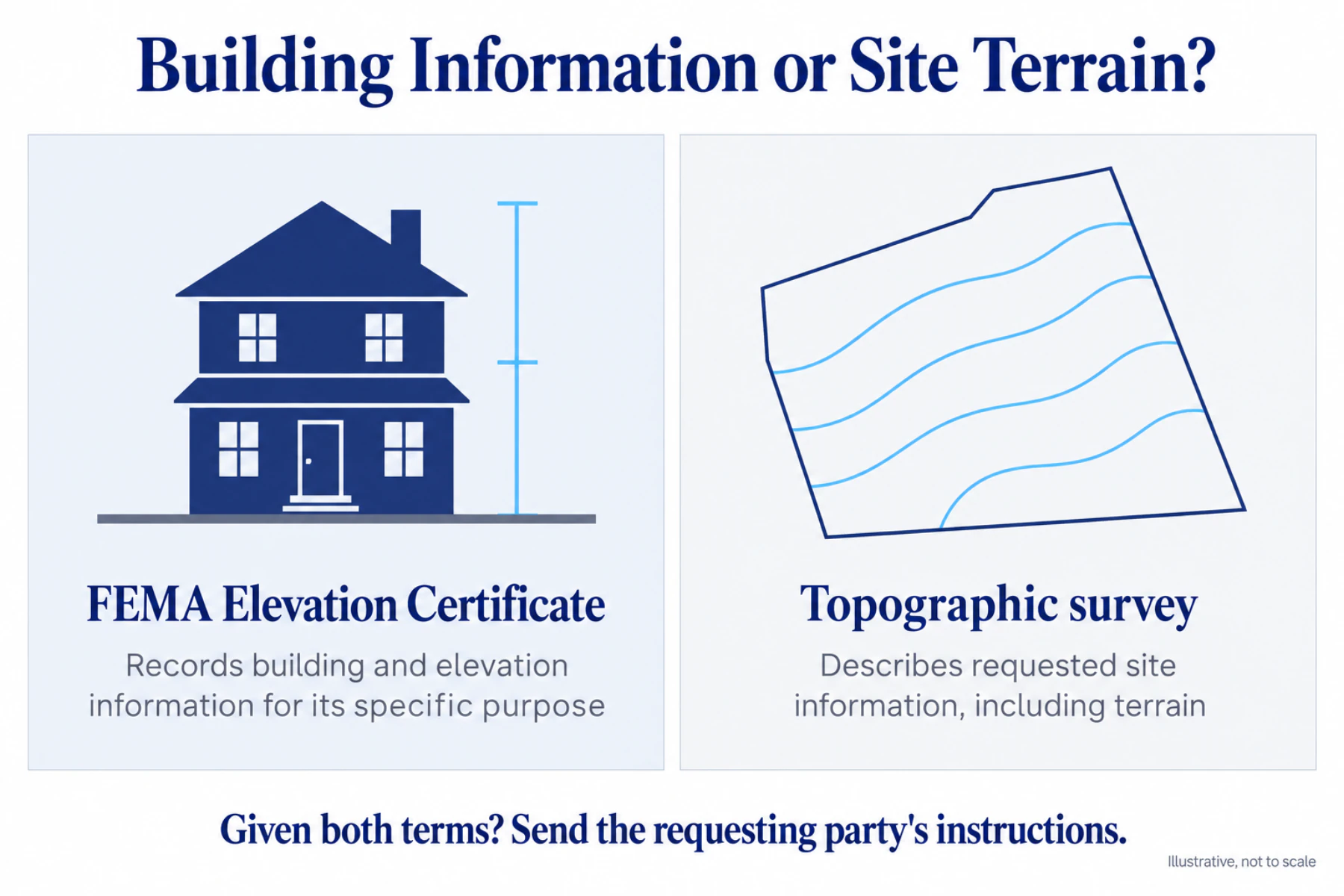
Illustrative comparison of a FEMA Elevation Certificate for a building and a topographic survey of terrain
Building information or site terrain? Illustrative, not to scale.
  • Insurance Questions

    Certificate requirements and insurance decisions should be confirmed with your insurance professional. An elevation certificate does not promise a premium reduction. The National Flood Insurance Program's certificate guidance explains how the document can inform an insurance discussion and how to look for an existing record.

    If an agent suggested obtaining a certificate, ask what question it will help answer and who should receive the completed document. Include that explanation with the survey inquiry. A quote for survey work should be considered separately from the agent's explanation of coverage, policy terms and possible pricing changes.

  • A Building or Floodplain Submission

    A department can request elevation documentation for a particular project or stage of construction. Share the actual letter, checklist or permit reference so the survey discussion addresses that request. Ask the department or your design professional to identify the required stage and submission format if the instructions leave either unclear.

    Department review remains a separate step. Arranging survey work does not establish that a project is approved, and the requested delivery date should allow for the recipient's own review. Tell us about a closing, inspection or submission date early so the office can discuss availability for your property.

  • Terrain Information and Flood Maps

    Site-wide ground levels, contours and information for a designer belong in a topographic survey discussion. If the request is still unclear, our elevation survey guide explains the different starting points without asking you to choose a technical product on your own.

    For published flood-map information, use the FEMA Flood Map Service Center. A map question and a request for building elevation documentation are different matters to explain to the professional advising you. Include both if your inquiry involves them, so the office understands the full context.

Prepare Your Quote Request

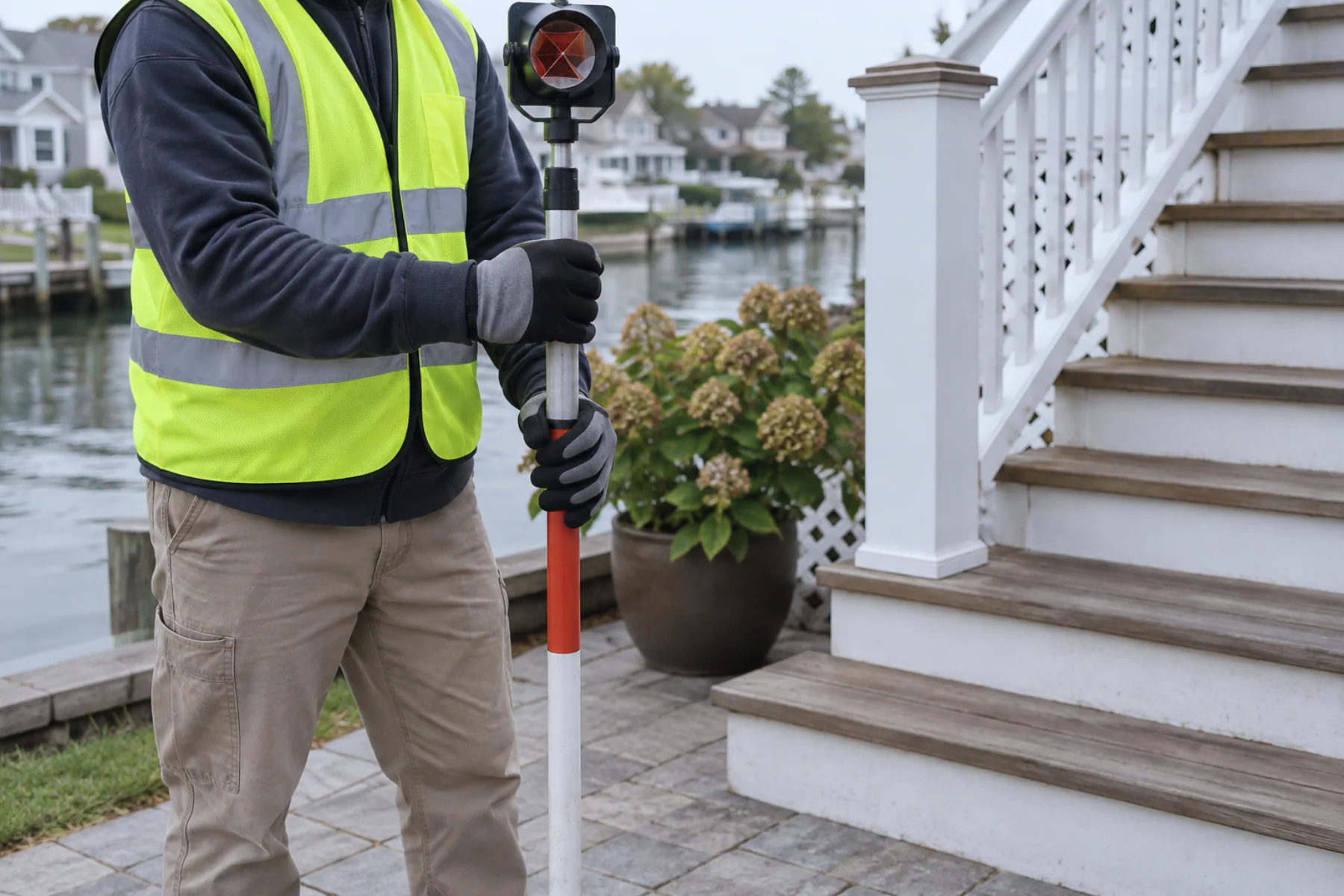
Surveyor holding a prism pole at the stairs of an elevated home on Long Island's South Shore
At the stairs of an elevated South Shore home

Property and Project Details

A useful starting request includes the information below. Share what you know and identify anything you're still confirming, especially if the address covers more than one building or a project is underway.

  • The property address, including town or village and ZIP code.
  • The person or organization requesting the certificate and the reason given.
  • The building concerned and whether it is existing, under construction or being altered.
  • Any certificate, survey, plan or written instructions already available.
  • The date you're working toward and who should receive the completed document.

For a property without a clear street address, give the parcel identifier and location you have. The initial request starts a conversation about the work. It does not require you to interpret flood requirements or fill in technical certificate measurements yourself.

Access Arrangements

Let the office know who can authorize access and whether the property is occupied. Mention a tenant, property manager or contractor who must be contacted, along with locked areas or active work that could affect arrangements. Describe the situation so access can be discussed before a visit is scheduled.

Keep our office informed if the building's condition or project schedule changes after the inquiry. Work taking place between the request and the survey can affect what needs to be discussed with the recipient. Use the same property reference when you send an update.

Scope, Pricing and Timing

A Quote for Your Property

The quote depends on the building, the requested documentation and the work needed for that request. Provide the intended use and available records so the office can discuss the scope with you. An inquiry for an existing home and a request tied to construction should each be explained on their own terms.

Ask which deliverable is included, how it will be provided and who will receive it. If a later stage or revised request could require additional work, discuss that possibility before arrangements are made. This gives you a clearer basis for comparing the proposed scope with the requesting party's instructions.

The Date You're Working Toward

Give us the deadline and its purpose. A closing date, a department submission and a construction milestone can involve different people, so include the contact who can clarify the timing. Our office will discuss available scheduling with you rather than treating a date entered in the request as a confirmed commitment.

Need a job done in two to three business days? Contact us for expedited pricing and availability. If you already have work underway with us, use our contact page and include the property address and order reference, if available.

FEMA Elevation Certificate Questions

Can I Start Without Knowing the Flood Zone?

Yes. Share the property address and the request you received. Explain what you're trying to obtain rather than selecting a zone by guesswork. The relevant professional or authority can help you identify which flood information applies to the request.

Is a Topographic Survey the Same Document?

No. A topographic survey describes requested site information, including terrain. A FEMA elevation certificate records building and elevation information for its specific purpose. Send the requesting party's instructions if you have been given both terms.

Should I Order Before Speaking With My Agent?

Ask the agent what they need first. They can explain the insurance question, whether an existing certificate will be useful and where to send the document. You can then request a quote with that purpose clearly stated.

Can You Help With a Property Being Renovated?

Describe the work and provide the request from the department or professional involved. The appropriate documentation and timing depend on the project. Include the current construction stage and any expected changes before the proposed survey date so the scope can be discussed accurately.

What Happens After I Send an Inquiry?

Our office will discuss the property, requested work, pricing and available timing with you. Sending the form starts that discussion. Keep the requester's contact details nearby in case a requirement needs clarification before work is arranged.

Discuss Your Property With Our Office

Long Island and Surrounding Coverage

We serve Suffolk County, Nassau County and the Hamptons, plus the Bronx, Brooklyn, Queens, Staten Island, Rockland County and Westchester County. Give us the exact location when you inquire so we can discuss the property and requested work. Manhattan is outside our service area.

Begin With the Request You Received

Call (631) 256-3019, Monday to Friday, 9:00 AM to 5:00 PM, or email surveys@aeriallandsurveying.com. You can also send your property details through our quote request. Include the certificate request and the date you're working toward, and our office will discuss the next step.